Keeping people and purpose at the centre
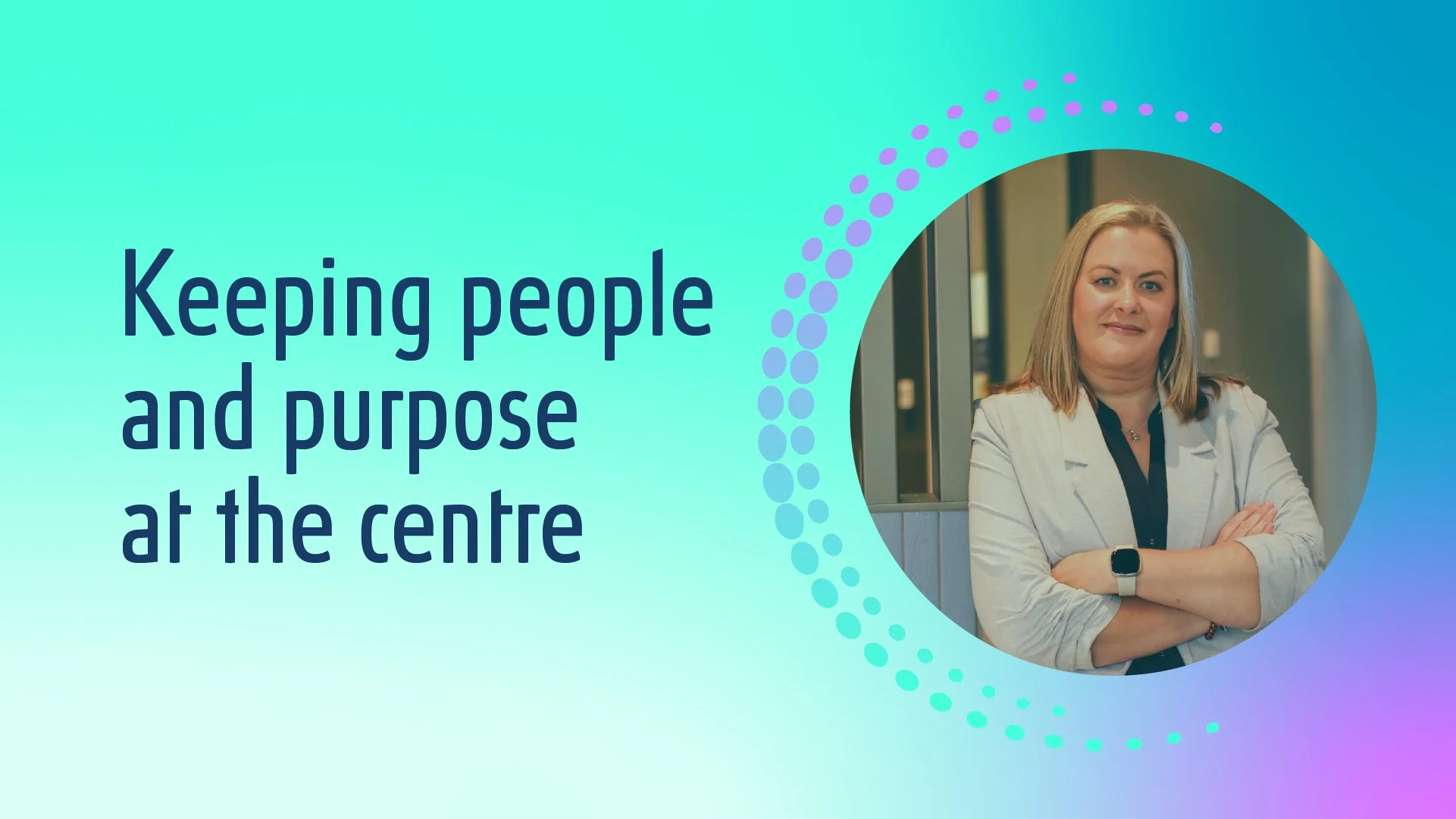
Hi, I’m Emma, Chief Operating Officer at Spiral.
“I’m sure my face has popped up on your screen from time to time. A big part of my role is creating the right environment for our team to do their best work, supporting the delivery of your research all around the world.”
I’ve been reflecting a lot on how fast clinical trial technology is changing, and what that means for the people behind the infrastructure.
The world we’re working within is shifting so quickly. We have access to much better tools, smarter automation and more ways to collaborate virtually than we ever have. For me, that makes the human side of our work more important, not less! Because while the tools can help us explore new possibilities together, they don’t provide the purpose, context or judgement required. Those capabilities still come from the humans delivering the work.
The technology needs to be exceptional; that’s a given. But so does the problem-solving and decision-making behind it. My role is to make sure we have the capability and culture to make those decisions well.
Culture shows up in the work we deliver
We all know that clinical trial infrastructure isn't built by one person. Our work intentionally draws on different perspectives across clinical trials, testing, data, software development, compliance and client services. Most of the good work comes from bringing those people and perspectives together in the right way, at the right time.
One word we value a lot at Spiral is kaitiakitanga. In te reo Māori, the indigenous language of New Zealand, kaitiakitanga means the responsibility to act with care. At Spiral, that means being good guardians of our work, our relationships, and the information entrusted to us.
When you're building technology that supports clinical trials and medical research, that responsibility matters. A strong culture doesn't sit separately from client delivery. It shows up in how we ask questions, how we communicate with one another, and the ownership people take when something needs solving.
It also shapes how we lead the work internally. Rather than simply handing someone a problem and asking them to fix it, we might ask a different question, bring in another perspective, or create the space and resources for people to solve it together. The answer is often better because of it. And our clients should feel that.
Experience becomes something we can build on
One of the things I'm particularly interested in is what happens as individual experience becomes shared knowledge. Every trial teaches us something new, and every challenge solved gives us another pattern to recognise. Over time, that experience helps our team ask better questions earlier in the design process and identify issues a client may not have otherwise encountered yet.
We're increasingly looking at how we capture and build on that knowledge across Spiral. Technology and automation have an important role here. They can make proven approaches more reusable, reduce unnecessary manual work, and create greater consistency in how we build and deliver trials.
But the goal isn't to automate the thinking out of the process. It's to give good people better tools and more space for the thinking that matters.
AI still needs human judgement
AI is naturally part of this conversation, right? Its capabilities are developing incredibly quickly, and we're deeply engaged in this opportunity, which for us means actively exploring how it can help us work more effectively.
But I don't think that means handing judgement over to technology. AI outputs still need to be questioned and carefully checked by someone who understands the work, the risks and the people involved.
AI can help us work faster and open up new ways of solving problems, but it still takes a person who understands the trial to question what comes back, apply context and make the right call. And when the work involves clinical research, sensitive data and decisions that can affect people's lives, that human judgement really, really matters.
Clinical trials are full of context. Something can appear technically correct and still not be the right answer for a particular study, workflow or clinical environment. And that’s where experience comes in. The opportunity here is to combine increasingly capable technology with the knowledge and judgement we've developed through years of supporting complex research!
Real people remain at the centre
I’ve learned that leadership doesn’t mean having every answer immediately. Sometimes the most useful thing you can do is pause, ask another question, bring in a different mindset, or give people the space and support they need to work through a problem.
The same is true of our work with clients. We listen. We ask questions. We bring what we've learned from other trials, but we don't assume the answer will always be the same. Everything begins with a conversation.
Spiral's mission is to improve health outcomes by delivering reimagined research tools, and this year we're reimagining a great deal about how we work and what technology makes possible. But the reason we're doing it hasn't changed.
We're a team of people working alongside other people to support research that may lead to better, world-first health outcomes, often during some of the most difficult moments in someone's life.
That human purpose has to remain at the centre of what we build!